There was a time, not even that long ago, when starting a business meant a trip to the bank, a thick folder of documents, and a prayer that someone would lend you money. You needed inventory, a storefront, employees, and a logo that cost more than your first car.
That world is gone.In 2026, you can start a real, money-making online business with nothing but a phone, a free internet connection, and a willingness to learn.
- No office.
- No investors.
- No business degree required.
(Though if you have one, congratulations, you spent a lot of money learning things you could now Google for free.)
AI tools have eliminated almost every technical barrier that used to stop ordinary people from starting online businesses.
You no longer need to be a writer, designer, video editor, or programmer. AI can help you do all of those things, for free or nearly free.
This guide walks you through seven proven online business models that real beginners are using right now to earn money online — some earning tens of thousands of dollars per month.
We will break each one down in plain language, tell you exactly how to start, which free tools to use, and how AI speeds everything up.So grab a coffee (or your local equivalent), and let’s get into it.

What You Actually Need to Start (Spoiler: Not Much)
Before we dive into the seven business models, let’s clear up a common myth: you do not need to be tech-savvy, creative, or experienced to start an online business in 2026.
You need three things:
- A device with internet access (a smartphone is enough to get started).
- Free accounts on a few platforms (we’ll tell you exactly which ones).
- Consistency.
The businesses in this guide are all ‘organic’ meaning they grow through content, search engines, and social media rather than paid advertising.
That is good news for beginners because it means you can build real traction without spending a single naira, dollar, or cedi on ads.
Business #1: High-Ticket Affiliate Marketing (The Smart Way)
Affiliate marketing is simple:
- you recommend someone else’s product, a customer buys it through your special link, and you earn a commission.
- You never handle the product.
- You never deal with customer complaints.
- You just connect buyers with sellers and collect a cut.
It’s like being a really well-informed friend who says, ‘Hey, this software completely changed how I run my business’ except you earn money every time your friend listens to you.
The old version of affiliate marketing was chasing $5 commissions selling cheap Amazon products.
The new version and the one that actually builds serious income is high-ticket affiliate marketing.
Instead of promoting a $10 phone case, you promote products that cost $500, $1,000, or even $5,000.
You might also promote software tools that pay you every month as long as the customer stays subscribed.
These are called recurring commissions.Think about this: if you earn a 30% commission on a $1,000 software subscription, you earn $300 from a single sale.
If that customer stays subscribed for a year, you earn $3,600 from one person you helped once.
That’s not a side hustle. That’s a business.
Where to Find Products to Promote
Several affiliate networks and programs are completely free to join:
- ClickBank: One of the largest affiliate marketplaces. You’ll find digital courses and software with commissions ranging from 30% to 75%.
- Amazon Associates: Amazon’s own affiliate program. Great for product-focused content, though commissions are lower.
- GoHighLevel (GHL): A popular marketing software that pays a 40% recurring commission. Many marketers earn $1,000 to $5,000 per month just from this one program.
- SaaS Programs: Almost every major software tool has an affiliate program. Think email marketing tools, website builders, accounting software, and project management apps.
Most beginners think of affiliate marketing as posting links on Instagram or running Facebook ads.
But there’s a platform that experienced marketers quietly call ‘the goldmine that beginners ignore’: Pinterest.Here’s why Pinterest is special: it’s not just a social media platform, it’s a visual search engine.
People go to Pinterest the same way they go to Google: to search for solutions, ideas, and things to buy.
Over 500 million people use Pinterest every month, and a huge portion of them are actively looking to purchase something.
When you design and post a Pin (basically a picture post with a link), it doesn’t disappear the next day like an Instagram story.
A pin can bring traffic to your affiliate link for months or even years after you upload it.
That’s completely free, compounding traffic.
You should also use TikTok and Instagram Reels.
Short videos that solve a problem, ‘3 tools that saved my small business $500 per month’, naturally attract people who are ready to buy.
You mention the tools, add your affiliate links in your bio or video description, and earn commissions.
Business #2: YouTube Automation (Running Channels Without Showing Your Face)
The Idea Behind Faceless YouTubeIf someone told you there are people earning $300,000 per month from YouTube without ever appearing on camera, without owning a professional microphone, and without spending years building a personal brand — you might say that sounds made up.
It’s not made up. It’s called YouTube Automation, and it’s one of the most beginner friendly business models available to beginners in 2026.
The concept is straightforward: instead of being the on-camera personality of a YouTube channel, you are the owner and manager. The channel produces content in a specific niche using scripts, voiceovers, stock footage, and video tools — all assembled into professional-looking videos.
The excitement of this model is that once a video is published, it keeps earning. YouTube runs ads on your videos, you earn money from those ads, and meanwhile you’re either sleeping or working on the next video.
As the channel grows, you can outsource the entire production process and make money while doing something else entirely.
Choosing the Right Niche: Why CPM Matters
CPM stands for ‘Cost Per Mille’, it’s how much advertisers pay for 1,000 views on a video. Not all niches pay the same.
A cooking channel might earn $2 to $4 per 1,000 views. A finance channel might earn $15 to $40 per 1,000 views.
That’s a massive difference in income for the same number of views.
As a beginner, you want to build in high-CPM niches such as:
- Personal Finance and Investing (how to save money, invest in stocks, build wealth)
- – Technology and Software Reviews
- Luxury Lifestyle and Travel
- Business and Entrepreneurship
Using the tools available in 2026, you can now produce genuinely good YouTube content for free or close to it.
Tools like Nano Banana and Kling AI allow you to generate entire video clips from simple text prompts.
You type something like ‘aerial view of a luxury penthouse in Dubai at sunset’ and the AI generates a realistic video clip in seconds.
The workflow looks like this:
- Use ChatGPT to write a compelling script for a 5 to 10 minute video.
- Use a free AI voice generator (like ElevenLabs free tier) to clone your voice.
- Find free stock footage from Pexels or Pixabay, or generate clips using AI tools.Use a free video editor like CapCut or DaVinci Resolve to assemble the video.
- Upload to YouTube with an AI-optimized title, description, and tags.
Monetization: How the Money Actually Comes In
YouTube requires 1,000 subscribers and 4,000 watch hours to join the YouTube Partner Program — this is the main gateway to ad revenue.
That sounds like a lot, but a faceless channel in a high-demand niche, posting consistently, can reach those milestones within 3 to 6 months.
Beyond ads, you earn from affiliate links in your video descriptions.
A single video about ‘best budgeting apps’ can include 5 to 10 affiliate links, each earning you commissions from viewers who click through and purchase.
Some serious operators run 10, 20, or even 50 channels simultaneously, all in different niches. Each channel becomes an independent income stream. That’s not a job. That’s a portfolio.
Business #3: Print on Demand
Print on Demand (POD) is one of the cleanest business models available to beginners.
- You make a design.
- You upload that design to a POD platform like Printify or Printful. Those platforms connect to an online store on Etsy or Shopify.
- When a customer buys a product with your design — say, a t-shirt or a mug — the POD company prints it, packs it, and ships it directly to the customer. You never see the product.
- You never ship anything.
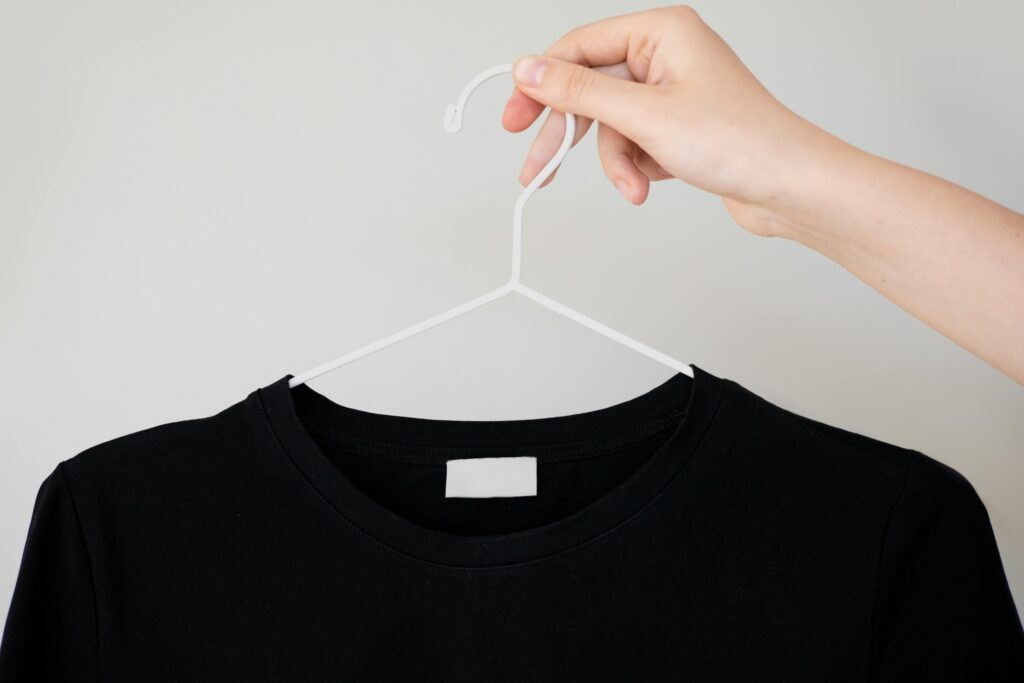
- You just receive the profit margin.It’s like running a clothing brand without ever touching a single piece of fabric. That used to be a joke. Now it’s an entire industry.
Standing Out: The Cross-Niche Formula
The biggest challenge in POD is standing out. If you search Etsy for ‘funny cat t-shirts,’ you will find thousands of results.
How do you compete? The answer is the Cross-Niche Formula. Instead of targeting broad niches, you combine two specific niches to create something unique that appeals to a very specific group of people who feel like the product was made just for them.
Examples:
- ‘Cats’ + ‘Software Engineering’ = a mug that says ‘I code at 2am because the cat won’t let me sleep”
- Nurses’ + ‘Coffee’ = a t-shirt that says ‘I run on coffee and adrenaline”
Each of these targets a very specific person and that person sees it and immediately thinks, ‘
This was made for me.’ That emotional connection is what attracts sales.
You do not need to be a graphic designer to create POD products in 2026. Canva’s free version gives you access to thousands of templates, fonts, and design elements that you can combine to create professional-looking designs in under 30 minutes.
For more unique or artistic designs, use free AI image generators.
You can also use AI to generate slogans. Ask ChatGPT: ‘Give me 20 funny, punchy slogans for a mug targeted at software engineers who drink too much coffee.’
That list alone gives you enough ideas to create 20 different products. Printify has a free plan.
Platforms like Redbubble and Teepublic allow you to upload designs and sell completely for free — they take their cut from the sale price and you earn the margin. Zero upfront cost. Zero risk.
Business #4: Etsy Digital Product Store
Here’s a concept that genuinely changes how people think about income: you can create something once and sell it an unlimited number of times without doing any additional work.
A digital product, which is a downloadable file like a PDF, a template, a spreadsheet, or a design costs you zero dollars to make.
You upload the file to Etsy, a customer pays for it, the file is automatically sent to their email, and you earn money while you’re sleeping.
Etsy processes the payment and handles the delivery.
- No physical inventory.
- No trips to the post office.
- No packaging costs.
- No returns of physical goods.
scalable income from files you created sitting at your kitchen table.
What Sells Well on Etsy in 2026?
The Etsy marketplace has millions of buyers actively searching for digital products.
Here are the categories that consistently perform well:
- Canva Templates: Wedding invitations, business cards, social media templates, presentation slides, and resume templates. These are huge. A single popular Canva template pack can make thousands of sales.Printable Planners and
- Journals: Daily planners, budget trackers, meal planners, gratitude journals, and habit trackers. People love printable planners because they’re cheap and they can print as many copies as they want.
- Digital Notebooks: For use on tablets like iPad with apps like GoodNotes or Notability. Digital student notebooks are particularly popular.
- Printable Wall Art: Inspirational quotes, minimalist illustrations, botanical prints. People buy these to print at home and frame them.
- Spreadsheet Templates: Budget trackers, business expense trackers, content calendars, social media analytics dashboards.
Etsy is a search engine just like Google.
When someone types ‘wedding budget tracker’ into Etsy, they see a list of products. Your job is to make sure your product appears near the top of that list.
You can use ChatGPT to:
- Research what kinds of digital products are in demand but have low competition.Write compelling product titles with the right keywords.
- Write detailed product descriptions that answer customer questions.
- Generate all 13 tags per listing (Etsy allows 13) to maximize discoverability.A well-optimized Etsy listing for a high-demand product works for you every single day without any additional effort.
Focus on making 10 to 15 solid listings in your first 90 days, and then watch the traffic compound.
Business #5: Blogging
Every year since roughly 2018, someone publishes an article claiming that ‘blogging is dead.’
And every year, there are thousands of bloggers earning $10,000, $50,000, and even $100,000+ per month from their content sites.
High-quality, genuinely helpful, well-optimized content sites are thriving more than ever.
The difference in 2026 is that AI has completely changed how content is created.
- You no longer sit at a blank screen trying to write a 2,000-word article from scratch.
- You use AI to create a first draft and outline, and then you edit it with your own experience, opinions, and insights.
The result is high-quality content written in a fraction of the time it used to take.
Starting a Blog for $0
The technically free option is to write on platforms like WordPress.com (free tier), Medium, or Substack.
These platforms host your content without charging you anything. The limitation is that you don’t fully own your content or your audience the way you would with your own website.
If you can eventually invest a small amount around $3 to $5 per month for basic hosting, you should set up your own WordPress site on a domain you own.
But if you’re starting with truly zero money, start on a free platform and build momentum first. You can migrate your content later when your blog starts earning.
How Blogs Make Money
- Display Advertising: Once you reach a certain traffic threshold, you apply to ad networks like Google AdSense or premium networks like Mediavine. Ads run automatically on your site and you earn money based on views and clicks.Affiliate Marketing: Naturally weaving affiliate links into your content is arguably the highest-earning strategy for bloggers.
- Sponsored Posts: Brands pay you to write an article featuring their product once your blog has an established audience
- .Digital Products: Sell your own eBooks, courses, or templates directly through your blog — the highest-margin option.
Blogs take the longest to gain traction compared to the other models in this guide — usually 6 to 12 months before significant traffic arrives.
But once a blog is established and ranking, the traffic and income are exceptionally stable and passive.

Business #6: Faceless Theme Pages on Facebook and Instagram
A theme page is a social media account built around a topic rather than a person.
Think of pages like ‘Daily Motivation’ that posts quotes every day, ‘Cooking Hacks’ that shares recipe tips, or ‘Interesting Science Facts’ that posts fascinating information about the universe.
Nobody knows who runs these pages. The account doesn’t have a face. But the pages often have millions of followers and generate significant income.
This model is ideal for people who want to build an online business but are camera-shy, privacy-conscious, or simply not interested in being a social media personality.
Facebook has been aggressively paying in 2026 through its Performance Bonus program.
This program pays real money based on how much engagement their posts generate. High-engagement posts from pages that have built loyal followings are earning creators hundreds of dollars per month from Facebook alone.
The posts that generate the most engagement are usually questions that people feel compelled to answer, controversial-but-friendly statements that spark friendly debate, and nostalgic content. AI makes generating this content trivially easy.
You can ask ChatGPT: ‘Give me 30 highly shareable, engagement-generating posts for a daily motivation Facebook page’ and have a month’s worth of content in minutes.
The Best Theme Page Niches
The best theme page niches share three qualities:
- they have universal appeal,
- they connect emotionally with people,
- and they have natural commercial opportunities.
High-performing niches include fitness and gym motivation, personal finance tips, cooking and recipes, funny and relatable content, parenting, entrepreneurship and business, travel and adventure, and quotes.
Use scheduling tools like Buffer (free tier) or Meta Business Suite (completely free) to schedule weeks of content at once. Once content is scheduled, your page essentially runs itself while you focus on other things.
Conclusion
The seven business models in this guide are not hypothetical. They are not ‘next big thing’ predictions. They are models that real people — many of them with no business experience, no marketing background, and no startup capital — are using right now to build real income online.In 2026, the barrier to starting an online business is essentially zero. The tools are free. The platforms are free. The AI that would have cost a Fortune 500 company millions of dollars five years ago is available on your phone today for free.What is not free — and what no tool can provide — is the commitment to show up consistently over the months it takes to build something real. That part is entirely on you.But here’s the good news: a few months of consistent work on any of these models can genuinely change your financial situation. Not someday. Not maybe. For real, in real time.Pick one model. Start today — even if today means spending 30 minutes setting up a free account. The gap between people who talk about starting online businesses and people who actually run them is not talent, intelligence, or resources.