A Complete Beginner’s Guide to Making Money Online with Zero Inventor
Let me paint you a picture.
It is 7 am on a Tuesday. You roll out of bed, pour yourself a cup of coffee, and check your phone. While you were sleeping, someone on the other side of the world bought a hoodie with a funny design you made in 20 minutes last week. The order was processed automatically. A company printed the hoodie automatically. The package is already on its way to the customer. And your profit just landed in your account, automatically.
You did not lift a finger. You did not pack a box. You did not even own the hoodie before it was sold.
Welcome to Print on Demand, one of the most beginner-friendly and genuinely exciting ways to build an online income in 2026.
Now, before you roll your eyes and think this is another “get rich overnight” pitch, let me be straight with you: this is a real business model that requires real effort, smart strategy, and patience. But the barrier to entry is incredibly low. You can start today with zero money, zero design experience, and zero inventory. And if you follow the steps in this guide, you will have everything you need to build a profitable store from scratch.
This guide is built for complete beginners. We are going to walk through every single step, from finding your first niche, to designing your first product, to making your first sale, to eventually scaling to a business that earns you $10,000 a month or more. We will keep the language simple, the steps clear, and the value extremely high.
Ready? Let’s get into it.
What Exactly Is Print on Demand? (And Why It Is Amazing for Beginners)
Print on Demand, often shortened to POD, is a business model where you sell custom products without ever holding any physical inventory.
Here is how it works in plain English:
- You create a design. This could be a funny quote, an illustration, a pattern, or really anything you can imagine.
- You upload the design to a platform. Places like Etsy, Amazon Merch, Redbubble, or your own Shopify store.
- A customer finds your product and buys it. This could happen any time of day or night.
- The print provider takes over. A company like Printify or Printful automatically prints your design on a real physical product — a t-shirt, a mug, a canvas print, a hoodie, a phone case, you name it.
- The product ships directly to the customer. The customer gets their order. You collect the profit. You never touched anything.
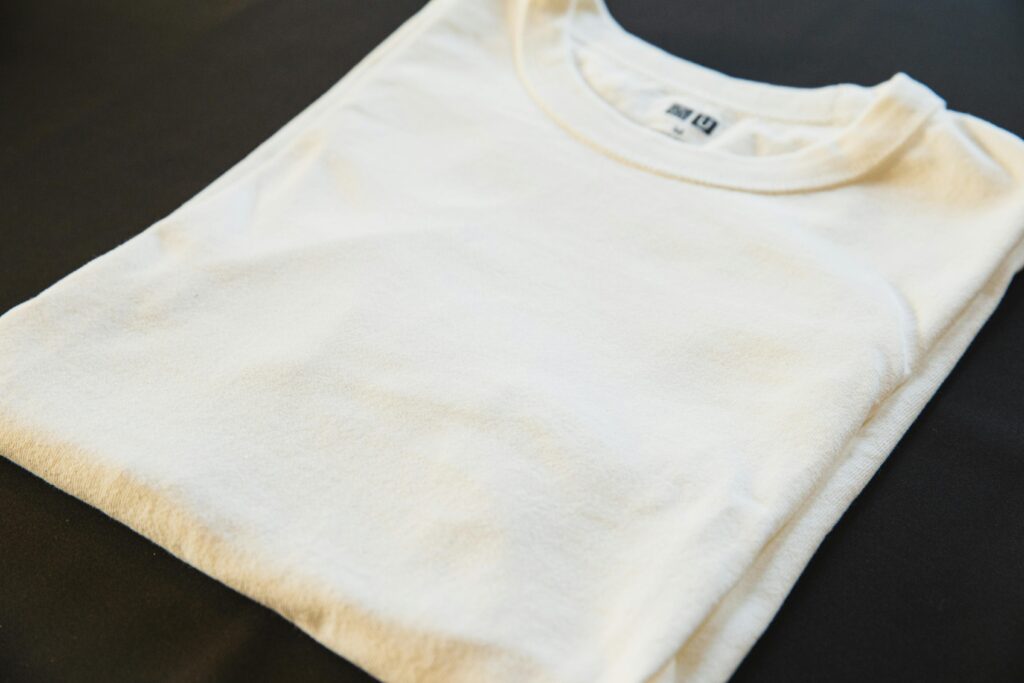
That is it. You never buy products in bulk. You never rent a warehouse. You never deal with packaging tape and trips to the post office. The whole system runs without you once it is set up.
This “create once, sell forever” model is one of the most powerful concepts in online business. You spend a few hours making a great design, and it can generate income for years.
💡 Think of each design you upload like planting a seed. You do the work once, and the tree keeps bearing fruit for a long, long time.
What Can You Sell with Print on Demand?
The product catalog in 2026 is enormous. Here are some of the most popular items:
- T-shirts, hoodies, and sweatshirts
- Mugs, tumblers, and water bottles
- Wall art, canvas prints, and posters
- Phone cases and laptop sleeves
- Tote bags and backpacks
- Throw pillows and blankets
- Hats and beanies
- Stickers, journals, and notebooks
- Pet accessories and bandanas
The market is huge. People buy custom products for birthdays, holidays, personal expression, interior decoration, and gifts. And they are searching for them every single day.
How Much Money Can You Actually Make?
This is the honest answer: it depends entirely on how much work you put in, how smart your strategy is, and how patient you are.
Some beginners make their first $100 within their first month. Others build stores that earn $5,000 to $10,000 per month within a year. A small number of dedicated sellers earn six figures annually from their POD stores.
The profit margins on individual products are not massive, you might make $5 to $15 on a t-shirt, for example. But when you have hundreds or thousands of designs across multiple platforms, and sales come in around the clock, those small profits stack up into something very meaningful.
The key is volume, consistency, and strategy. And that is exactly what this guide will teach you.
Phase 1: Finding Your Profitable Niche
Here is the number one mistake that beginners make in Print on Demand: they try to sell to everyone.
They create a generic t-shirt that says “I Love Dogs” and wonder why nobody buys it. The problem is not the design — it is the audience. When you try to appeal to everyone, you end up standing out to no one.
The sellers who make real money focus on a specific, targeted niche. And in this phase, we are going to teach you how to find one.
What Is a Niche, and Why Does It Matter?
A niche is simply a specific, focused group of people who share a common interest, identity, or passion. Instead of selling to “dog lovers,” you sell to “Golden Retriever owners who love vintage 90s aesthetics.” Instead of selling to “nurses,” you sell to “ICU nurses who drink too much coffee and have zero patience for nonsense.”
The more specific you get, the easier it is to connect with your target customer on an emotional level. And emotional connections lead to sales.
One of the most reliable methods for finding a winning niche is something called the Cross-Idea Formula. The idea is simple: you take two unrelated but popular concepts and combine them into something fresh and specific.
Here are some examples:
- Golden Retrievers + Vintage 90s Aesthetic = A nostalgic, retro-looking dog lover shirt that stands out in a sea of generic pet products
- Nurses + Sarcastic Humor = Funny nurse apparel with relatable, over-the-edge captions for healthcare workers
- Construction Workers + Dad Jokes = Hilarious gifts for tradespeople that their families will love buying
The exciting thing about this formula is that you are not competing against a thousand other generic designs. You are in your own little corner of the market, speaking directly to a very specific person — and that person feels like the product was made just for them.
😄 How many graphic designers does it take to find a profitable niche? Just one, but first they need to spend three hours on color palettes, two hours on fonts, and finally thirty seconds actually Googling what people want to buy.
How to Research Low-Competition Niches
Finding a niche is not just about being creative — it is about finding where demand meets opportunity. You want a niche where people are already searching and buying, but where the existing products are not great.
Here are the best free and low-cost ways to research niches in 2026:
a) Search on Etsy Like a Customer
Go to Etsy and search for products in a niche you are considering. Look at the search results. Are there thousands of listings, or only a few dozen? If there are only a handful of listings and the designs look mediocre, that is a sign of low competition and potential opportunity. Pay attention to how many sales the top listings have. If a simple-looking design has thousands of sales, the niche is proven.
b) Use Alura for Etsy Research
Alura is a tool specifically built for Etsy sellers. It shows you search volume for keywords, competition levels, and trending niches. You want to look for keywords with high search volume but relatively few competing products. This sweet spot is where you want to plant your flag.
c) Look for Commercial Intent Keywords
Not all searches are created equal. Some people search because they are curious. Others search because they are ready to buy. The second type of searcher is who you want to target. Look for what are called “commercial intent” keywords, these are search phrases that signal buying intent. Examples include:
- “funny nurse gift for coworker”
- “aesthetic cat lover hoodie”
- “minimalist teacher mug”
- “vintage 70s birthday shirt for dad”
People who type phrases like these are not just browsing. They are looking for something to buy. Design products that match these specific searches and you will be in great shape.
Use AI Tools to Generate Niche Ideas
This is where things get really exciting. AI tools like ChatGPT and Claude are incredibly powerful for brainstorming niche ideas at scale. Here are some prompts you can use right now:
- “Give me 20 specific niche combinations using hobbies and professions for Print on Demand products”
- “List 10 sub-cultures that are currently trending on social media that I could target with POD designs”
- “What are 15 hyper-specific dog breed niches with passionate fan bases that are underserved in e-commerce?”
In seconds, you will have more ideas than you can possibly use. Pick the ones that excite you most — genuine enthusiasm for a niche makes your designs better and your marketing more authentic.
Pro tip: Choose a niche you actually know something about. If you are a nurse, start with nursing humor. If you love hiking, start with hiking apparel. Your insider knowledge gives you a huge edge over people who are just guessing what the audience wants.
Validating Your Niche Before You Design
Before you spend time creating designs, do a quick validation check. Here is a simple three-step process:
- Step 1: Search for your niche on Etsy and Amazon. Do products exist? Are they selling? (Check for reviews and sales numbers.)
- Step 2: Search for relevant hashtags on TikTok and Instagram. Is there an active community? Are people posting and engaging?
- Step 3: Check Pinterest for pins related to your niche. High engagement on Pinterest pins is a strong sign that people care about the topic.
If you find evidence of demand in two or more of these places, you have a validated niche worth pursuing.
Phase 2: Designing Professional Products with AI and Free Tools
Here is some genuinely great news for anyone who has ever looked at a blank canvas and panicked: you do not need to be a graphic designer to create great Print on Demand products in 2026.
Thanks to a new generation of AI-powered design tools, even a complete beginner can create professional-quality designs in a matter of minutes. Let us walk through the best tools and techniques.
Canva
If you have not used Canva before, you are in for a treat. Canva is a free, web-based design tool that is so intuitive that most people figure out the basics in under an hour. It offers thousands of ready-made templates for t-shirts, mugs, posters, phone cases, and more.
Here is what makes Canva particularly great for POD beginners:
- Templates: You do not have to design from scratch. Start with a template that is close to what you want and customize it with your own text, colors, and images.
- AI Background Remover: Upload a photo or clipart image and Canva will automatically remove the background in one click. This is essential for creating clean, transparent PNG files.
- Font Library: Canva has hundreds of fonts, including many that work beautifully on merchandise.
- Elements Library: Thousands of icons, illustrations, and design elements you can use in your products.
💡 Always use the free version of Canva to start. Once you are making consistent sales, upgrade to Canva Pro for access to premium templates and the full AI toolkit. The upgrade pays for itself quickly.
Kittl
While Canva is excellent for beginners, Kittl is the tool that takes your designs to the next level. Kittl is specifically built for merchandise design — particularly t-shirts, hoodies, and apparel.
What sets Kittl apart is its collection of advanced typography effects and hand-drawn graphic sets. If you want your shirts to look like they were designed by a professional with a vintage or artisan aesthetic — the kind of thing you see on expensive boutique brand merchandise — Kittl is the tool for you.
Kittl also has AI-powered design features that can take a simple concept and turn it into a detailed, polished graphic in seconds. For anyone aiming at niches that value craftsmanship and style, Kittl is worth every penny.
AI Art Generation
One of the most game-changing developments for POD creators in recent years is the rise of AI image generators. Tools like Nano Banana and similar platforms let you describe an image in plain English and the AI generates it for you.
For example, you could type: “A vintage-style illustration of a golden retriever wearing a NASA astronaut helmet, retro color palette, distressed texture” — and within seconds, you have a completely unique piece of artwork that would have cost hundreds of dollars to commission from a human illustrator.
This is particularly nice for
- Creating unique clip art for niche designs
- Generating complex backgrounds and textures
- Producing illustration styles (vintage, watercolor, anime, etc.) on demand
- Testing multiple design concepts quickly before committing time to polish
Technical Requirements: Getting the Details Right
This section might not be the most exciting, but getting the technical details right is what separates amateur-looking products from professional ones. Pay close attention here.
- Resolution: Always 300 DPI
DPI stands for dots per inch. It is a measure of image quality. When you print something on fabric or paper, the image needs to be high enough quality that it does not look blurry or pixelated. For print-on-demand products, you always want your design files to be at least 300 DPI. Most design tools will let you set this when you create a new file.
- File Format: PNG with Transparent Background
Always export your design as a PNG file with a transparent background. This means the areas around your design are clear, not white. When the print provider places your design on a colored shirt, you want only your artwork to show up — not a white rectangle around it. Transparent PNG files ensure clean, professional-looking prints.
- Sizing Your Design Correctly
Different products have different size requirements. A design for a t-shirt is sized differently from one for a mug or a pillow. Always check the size guidelines provided by your print provider (Printify or Printful) before finalizing your design file. Getting the sizing wrong is one of the most common beginner mistakes.
💡Make a simple checklist for every design you make: Is it 300 DPI? Is the background transparent? Is it the correct size for the product? Running through this checklist before uploading saves you from embarrassing mistakes down the road.
Building a Design Workflow
As you get into a rhythm, you will want to develop a consistent design process. Here is a simple workflow that works well for beginners:
- Step 1 — Research (15 minutes): Search your niche on Etsy and Pinterest to see what is selling and what gaps exist.
- Step 2 — Concept (10 minutes): Use AI to brainstorm slogans, themes, or visual ideas. Pick your three favorites.
- Step 3 — Design (20-30 minutes): Open Canva or Kittl, find a suitable template, and customize it with your concept.
- Step 4 — Review (5 minutes): Check resolution, background transparency, and sizing.
- Step 5 — Export (2 minutes): Save as a 300 DPI PNG with transparent background.
With practice, this whole process can take under an hour per design. If you create one design per day, you will have 30 designs at the end of your first month. At 90 days, you will have nearly 100 products in your store — and that is when things start to get really interesting.
Now, listen carefully, what if you could get commercial license to professional designs to use in your own print on demand store, so you don’t have to worry about generating these designs yourself?
Well, you can, using Creative fabrica. This is a creative marketplaces by creatives for creatives where you can find high quality designs to use in your own print on demand business. So if you don’t want to have to make your designs from scratch, you can use creative fabrica to find high quality designs by professionals to use in your print on demand store.
for example, this is a mothers’ Day svg bundle that you can download on creative fabrica to use on your store because you get a commercial use license.
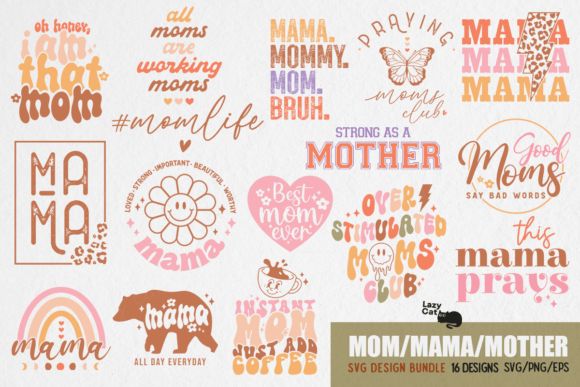
if you’re interested in using creative fabrica to start your print on demand business, you can sign for their free trial here to get your first 10 download for free.
Phase 3: Choosing Your Platforms
You have your niche. You have your designs. Now, where do you sell them?
This is one of the most important decisions you will make in your POD business, and the right answer depends on your goals. There are two main approaches: selling on established marketplaces, or building your own store. Let us break down both.
Passive Marketplaces:
The biggest advantage of selling on established marketplaces is that the traffic is already there. These platforms have millions of buyers searching for products every single day. You do not have to drive traffic yourself — you just have tshow up in the right searches.
Amazon Merch on Demand
Amazon Merch is one of the most powerful POD platforms in the world. Amazon has an almost unimaginable amount of traffic, and buyers on Amazon are ready to buy — they are not just browsing. When someone finds your shirt on Amazon, the trust and ease of purchase (Prime shipping, familiar checkout) removes a huge amount of friction.
The downside: Amazon Merch is invitation-only and has a tiered system. You start with a limited number of design slots and earn more as you make sales. Getting started can take a bit of patience, but it is absolutely worth applying.
Redbubble
Redbubble is a fantastic starting point for absolute beginners. You simply create an account, upload your design, and Redbubble handles literally everything — the printing, the shipping, the customer service, and even some of the marketing. You just collect your royalties.
The profit margins on Redbubble are lower than on other platforms, but it is genuinely one of the most hands-off ways to get started. Many creators use Redbubble as a passive income stream alongside their main store.
Etsy
Etsy is the best marketplace
for most beginner POD sellers. It is the world’s largest marketplace for unique, handmade, and personalized items — which means your POD products fit right in. The audience on Etsy is specifically looking for things that feel special and personal, which gives well-designed niche products a huge advantage.
Etsy does require more management than Redbubble — you need to write good product listings, manage your shop settings, and occasionally handle customer messages. But the earning potential is much higher, and Etsy’s built-in search is incredibly powerful for driving organic sales.
💡 Start with Etsy. It has the best balance of built-in traffic, earning potential, and beginner-friendliness. Once you have found designs that sell, expand to Amazon Merch and build your own Shopify store.
Direct-to-Consumer: Building Your Own Brand
If your goal is to build a long-term brand — something with a name, a following, and real equity — then eventually you will want your own store.
Shopify
Shopify is the gold standard for e-commerce store builders. It gives you complete control over your brand — your colors, your layout, your customer experience, your email list. Unlike Etsy or Amazon, when someone buys from your Shopify store, they are buying from you, not from a marketplace. That means you own the customer relationship.
In 2026, Ai assisted store builders have made setting up a Shopify store remarkably fast. You can have a professional-looking online store live in under 10 minutes. The main challenge with Shopify is traffic — you have to drive customers to your store yourself, since there is no built-in marketplace audience. This is why we spend an entire phase on organic marketing strategies later in this guide.
Print Providers
Whether you sell on Etsy or Shopify, you will need to connect to a print provider. These are the companies that actually produce and ship your products.
- Printify
Printify is a marketplace of print providers — they connect you with hundreds of different manufacturers around the world. This gives you a huge range of products and price points. Printify’s free plan is excellent for beginners, and their premium plan (around $30 per month) gives you significant discounts that can dramatically increase your profit margins.
- Printful
Printful is a single, integrated print provider known for its consistency and product quality. While their base prices are slightly higher than Printify, the quality control and the polish of their products are excellent. Many sellers use Printful when they want premium-quality products for a brand-focused store.
Both Printify and Printful integrate seamlessly with Etsy and Shopify. When an order comes in on your store, it automatically goes to your print provider, who prints and ships it without you doing anything. This automation is the core of the POD business model.
Phase 4: Setting Up Your Business Infrastructure
Now that you know how to find a niche, create designs, and choose your platform, let us talk about the business side of things. This phase is often overlooked by beginners, but it is essential for building something that lasts.
Do You Need to Register a Business?
When you are just starting out and making your first few sales, you do not need to worry too much about legal structure. But as your income grows, getting properly set up protects you and gives your business more credibility.
Forming an LLC
An LLC (Limited Liability Company) is the most popular legal structure for small online businesses in the United States. Here is why it matters: if something goes wrong in your business — say, a customer sues you over a product — an LLC protects your personal assets (your house, your car, your savings) from being at risk. Without an LLC, you are personally liable for anything that happens in your business.
Tools like ZenBusiness and Bizee make forming an LLC surprisingly simple and affordable. You can complete the whole process online in under an hour for as little as $49. Once your business starts generating consistent income, this is a step you should not skip.
💡 Even if you start as a sole proprietor, keep careful records of all income and expenses from day one. Good bookkeeping habits early on will save you enormous headaches at tax time.
Professional Branding
One of the fastest ways to build trust with customers is to look professional. This does not mean spending thousands of dollars on a fancy website. It means paying attention to the details that signal quality.
- Your Business Name
Choose a name that is memorable, easy to spell, and relevant to your brand identity. Use AI tools to brainstorm options — simply ask for something like “Give me 20 creative business name ideas for a t-shirt brand focused on outdoor adventure and humor” and you will have plenty to choose from.
- Your Logo
A clean, simple logo goes a long way toward making your store look professional. You can create one for free in Canva, generate one using AI logo makers, or hire someone on Fiverr for a small fee. Your logo does not need to be elaborate — simple and clean beats complicated and cluttered every time.
- Your Store Profile and About Page
On Etsy especially, many buyers read the About page before they decide to purchase. Tell your story. Why did you start this brand? What do you love about what you make? Customers connect with real people, and a genuine, well-written About page builds trust and loyalty.
Use AI to help you write a polished, authentic-sounding About page if writing does not come naturally to you. Just give the AI the key facts about you and your brand, and ask it to write a warm, friendly version.
Phase 5: Mastering Organic Marketing and Free Traffic
This is where most beginners either give up or leap ahead. Marketing feels overwhelming — especially when you have no budget for ads. But here is the truth: in 2026, the best traffic is free traffic. And with the right organic strategies, you can drive thousands of visitors to your store every month without spending a single dollar on advertising.
Let us break down the three most powerful free traffic channels for POD sellers.
Most beginner POD sellers completely ignore Pinterest. This is a massive mistake — and it is also your opportunity.
Pinterest is not just a social media platform. It is a visual search engine. People go to Pinterest specifically to discover things they want to buy. They search for “minimalist home decor ideas” or “funny coffee mugs for nurses” and Pinterest shows them beautiful images, including yours.
What makes Pinterest nice for POD sellers is the longevity of content. On TikTok or Instagram, a post might get engagement for 24 to 48 hours before it disappears. On Pinterest, a single pin can drive traffic for months or even years. The content you make today keeps working for you long into the future.
Setting Up Your Pinterest Strategy
Here is how to get started:
- Create a Business Account: Free, and gives you access to analytics.
- Enable Rich Pins: Rich Pins automatically sync your product’s title, description, and price directly from your Etsy or Shopify store. They look more professional and convert better than regular pins.
- Create Beautiful Images: Use Canva to create pin-sized images (1000×1500 pixels is ideal) that showcase your products in real-life settings. Product mockups on lifestyle backgrounds perform much better than plain product images.
- Use Keyword-Rich Descriptions: Just like Etsy, Pinterest is a search engine. Include relevant keywords in your pin titles and descriptions so people can find your content.
TikTok and Instagram Reels: Going Viral
Short-form video is the most powerful discovery tool in the world right now. A single TikTok video or Instagram Reel can reach hundreds of thousands of people who have never heard of you — and drive a wave of traffic to your store overnight.
The key to success on TikTok for POD sellers is not hard selling. Nobody wants to watch an ad. Instead, create content that is genuinely entertaining, educational, or aesthetically pleasing — and naturally features your products.
Content Ideas That Work
- “Behind the scenes” videos showing your design process — viewers love seeing how things are made
- “Get ready with me” or lifestyle videos featuring your products in real environments
- “POD business update” videos sharing your progress and earnings (these are incredibly popular)
- Trending audio clips paired with product showcase visuals
- “Day in the life of a Etsy seller” vlogs
The Viral Hook: Your First Three Seconds
The most important part of any TikTok or Reel is the opening three seconds. This is when viewers decide whether to keep watching or scroll away. Start with something that immediately creates curiosity, surprise, or emotion.
Strong hooks plus genuinely interesting content equals views. Views equal traffic. Traffic equals sales.
Faceless Content: Building a Business Without Showing Your Face
Here is something that surprises a lot of beginners: you do not have to be on camera at all to build a successful social media presence for your POD brand.
Faceless content uses AI avatars, voiceovers, stock footage, and screen recordings to create engaging videos that build an audience without ever showing your face. This approach has become increasingly viable in 2026 with the rise of high-quality AI video tools.
Some creators build entire YouTube channels using AI-generated narration over design tutorials and store walkthroughs. Others use AI avatars to deliver educational content about POD. These channels build audiences and drive traffic to their stores just as effectively as channels where the creator appears on camera.
If you are camera-shy, introverted, or simply want to maintain privacy, know that there is absolutely a path forward for you in this business.
Search Engine Optimization (SEO) for Your Product Listings
Every product listing you create on Etsy or your Shopify store is essentially a small web page that can rank in search results. Mastering basic SEO — that is, optimizing your listings so that search engines and platform algorithms show them to the right people — is one of the highest-value skills you can develop as a POD seller.
Here are the fundamentals:
- Title: Include your most important keywords at the beginning of your product title. Think about what your ideal customer would type into the Etsy search bar and put that phrase first.
- Description: Write a genuine, helpful description that includes keywords naturally. Describe who this product is for, what makes it special, and why someone should buy it.
- Tags: Use all available tag slots on Etsy. Think about different ways people might search for your product and use each variation as a tag.
- Images: Use multiple high-quality mockup images showing your product in real-life settings. Lifestyle images convert better than plain product shots.
Phase 6: Scaling and Automation
You have set up your store. You have uploaded designs. You have started getting traffic and making sales. Congratulations — you are officially a Print on Demand business owner.
But now the real question is: how do you go from your first few sales to consistent, growing income? The answer is scaling and automation.
Building an Email List
Here is something that many beginners do not realize until they have been in business for a while: your email list is more valuable than your social media following.
Social media platforms can change their algorithms, restrict your reach, or even ban your account. Your email list cannot be taken away. When someone gives you their email address, you have a direct line to them that no platform controls.
Even a small email list of a few hundred engaged subscribers can generate consistent sales when you send the right messages at the right times.
How to Build Your List
Offer a genuine incentive for people to subscribe. This could be a discount code for their first purchase, a free digital download related to your niche, or early access to new designs. Put a signup form on your Shopify store and mention your email list in your social media content.
Automating Your Email Marketing
Once you have subscribers, tools like Omnisend make it easy to automate your email marketing. Some of the most powerful automated sequences for POD sellers include:
- Welcome Series: A sequence of 3 to 5 emails sent to new subscribers introducing your brand and featuring your best products.
- Abandoned Cart Reminders: Automatically sent to customers who added a product to their cart but did not complete the purchase. These emails recover a significant number of lost sales.
- Post-Purchase Follow-Up: Sent after a purchase to thank the customer, encourage reviews, and suggest related products.
- Seasonal Campaigns: Planned emails around major holidays and events (Christmas, Valentine’s Day, Mother’s Day) when gift-buying spikes.
💡 Cart abandonment emails alone can recover 10 to 15 percent of lost sales. If you set up nothing else on this list, set up cart abandonment automation. The return on investment is extraordinary.
Paid Advertising
Organic traffic is powerful, but it has limits. When you are ready to accelerate your growth, paid advertising lets you put your products in front of a much larger and more targeted audience.
Start with a small budget when you first try paid ads. Put $5 to $10 per day into testing different ad creatives and audiences. Pay attention to which ads drive the most clicks and purchases, and gradually shift your budget toward what is working.
Bonus: Advanced Tips for Accelerating Your Growth
Once you have mastered the six phases above, here are some additional strategies that can dramatically accelerate your progress.
Seasonal and Trend-Based Designs
Some of the highest-selling designs on Etsy and Amazon are tied to specific seasons, holidays, or cultural moments. Christmas designs start selling in October. Valentine’s Day designs sell in January. Mother’s Day designs sell in April.
Build a seasonal content calendar and create specific designs for each major holiday and gift-giving occasion. These surge events can generate more sales in a single week than a regular product generates in an entire month.
Beyond scheduled holidays, keep an eye on trending topics. When a movie, TV show, meme, or cultural moment goes viral, there is often a short window of opportunity to create relevant (and copyright-safe) designs that ride the wave of search interest.
Personalization: The Premium Product Strategy
One of the best ways to charge higher prices and differentiate yourself on Etsy specifically is to offer personalized products. A mug with someone’s name on it, or a t-shirt that says “Best Dad in the Galaxy” with the child’s name added, commands a much higher price than a generic version of the same item.
Personalized products also generate more word-of-mouth — people who receive a customized gift are more likely to tell others about it and where it came from.
The slight operational complexity of personalization (you need a workflow for collecting and applying personalization requests) is worth it for the increased revenue and differentiation.
Using Analytics to Work Smarter
As you build your store, you will accumulate data about what is working and what is not. Use this data to make smarter decisions:
- Etsy Stats: Show you which listings are getting views, how many of those views convert to sales, and where your traffic is coming from.
- Pinterest Analytics: Show which pins are getting the most impressions and clicks, helping you understand what visual styles resonate with your audience.
- Google Analytics (on Shopify): Shows detailed information about how visitors behave on your store — what they click, how long they stay, and where they leave.
The goal is to double down on what is working. If a certain type of design is getting high conversion rates, create more designs in that style. If a particular traffic source is driving most of your sales, invest more time in that channel. Let the data guide your decisions.
Conclusion
Let us zoom out and look at the big picture.
Print on Demand in 2026 is not just a side hustle. For thousands of people around the world, it is a full-time business that provides financial freedom, creative fulfillment, and the ability to work from anywhere. The barriers to entry have never been lower. The tools have never been more powerful. And the global market for custom products has never been bigger.
Here is a recap of the complete roadmap we have covered in this guide:
- Phase 1 — Find Your Niche: Use the Cross-Idea Formula, keyword research, and AI tools to identify a specific, validated niche with real demand and manageable competition.
- Phase 2 — Design Your Products: Use Canva, Kittl, and AI image generators to create professional-quality designs without needing a design degree. Always export as 300 DPI transparent PNGs.
- Phase 3 — Choose Your Platform: Start on Etsy for built-in traffic, connect to Printify or Printful for fulfillment, and eventually expand to Amazon Merch and your own Shopify store.
- Phase 4 — Set Up Your Business: Register an LLC, create a professional brand identity, and set up a business email. Treat it like a real business from day one.
- Phase 5 — Drive Free Traffic: Master Pinterest Rich Pins, create viral TikTok and Reels content, and optimize every product listing for search.
- Phase 6 — Scale and Automate: Build an email list, set up automation sequences, and use AI-powered ad tools when you are ready to invest in paid growth.
The path to $10,000 a month from Print on Demand is not a straight line — it is a journey with early confusion, occasional frustration, and then growing momentum. Every design you upload is a small bet. Most bets will not pay off big. But some will. And as your catalog grows and your skills sharpen, the wins start to come more frequently.
The most important thing you can do right now is simple: start. Do not wait until you have the perfect niche or the perfect design or the perfect strategy. Upload your first product this week. Learn by doing. Adjust as you go.
💡 The best time to start your POD business was last year. The second best time is today. Pick your niche, open Canva, and make your first design.
You now have what you need to start your print on demand business. The knowledge is in your hands. The tools are free or affordable. The market is enormous and growing. All that is left is for you to take the first step.